

The Future of AI in Veterinary Documentation
Artificial intelligence is rapidly transforming the veterinary industry, with one of its most promising applications being in veterinary documentation. As the demand for veterinary services continues to grow, so does the administrative burden on veterinary professionals. AI offers a solution that can significantly reduce this burden while improving the quality of care.
Beyond Basic Transcription
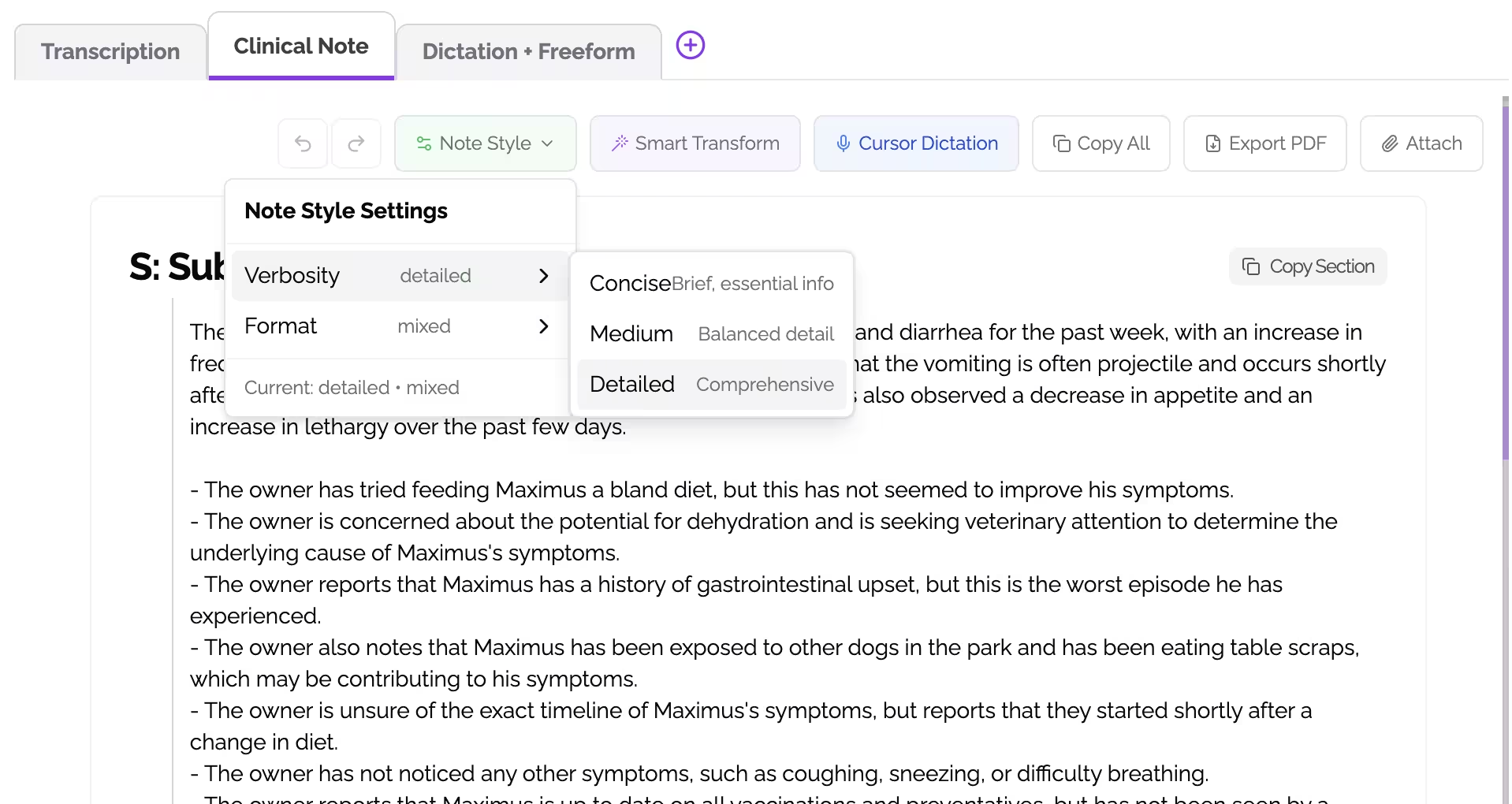
The first wave of AI in veterinary documentation focused on simple transcription -- converting spoken words to text. While this was helpful, it only addressed part of the challenge. Today's AI solutions, like Maxly, go far beyond transcription by:
- Understanding veterinary context -- Recognizing veterinary terminology, conditions, and treatment plans
- Identifying key clinical information -- Extracting symptoms, diagnoses, and prescribed treatments
- Structuring data appropriately -- Organizing information according to clinical standards
- Learning from feedback -- Continuously improving accuracy based on veterinarian input
The Impact on Veterinary Professional Experience
Veterinary professionals using AI for documentation report significant improvements in their day-to-day experience:
Time Savings
Studies show that AI assistance can reduce documentation time by 50-70%, giving veterinarians more time for:
- Direct animal care
- Reviewing complex cases
- Professional development
- Personal well-being
Reduced Cognitive Load
By automating documentation, AI reduces the mental burden of remembering details from patient encounters, allowing veterinarians to:
- Focus more fully on each patient
- Make better clinical decisions
- Experience less mental fatigue
Enhanced Job Satisfaction
With less time spent on administrative tasks, veterinary professionals report:
- Higher job satisfaction
- Lower burnout rates
- Better work-life balance
- Greater career longevity
Benefits for Animal Care
The impact of AI documentation extends beyond veterinarian convenience to directly improve animal care:
More Present Interactions
When veterinarians aren't distracted by documentation needs, they can:
- Focus more closely on the animal during examination
- Listen more attentively to pet owners
- Respond more thoughtfully to client concerns
- Build stronger relationships with clients and their pets
Better Clinical Decisions
AI-assisted documentation provides:
- More comprehensive and accurate records
- Better data for clinical decision-making
- Improved continuity of care across multiple veterinary professionals
- Enhanced ability to identify patterns over time
Looking Forward: The Next Evolution
As AI continues to evolve, we anticipate several exciting developments:
-
Predictive Insights -- AI will not only document what happened but help predict what might happen next based on similar patient profiles.
-
Ambient Intelligence -- Documentation will become increasingly passive, with room sensors capturing the encounter without any specific actions from the veterinarian.
-
Integration Across the Care Continuum -- AI documentation will seamlessly follow patients across different care settings, creating a truly comprehensive record.
-
Real-time Clinical Decision Support -- AI will flag potential issues or considerations during the encounter, serving as a virtual clinical assistant.
Embracing the Future with Maxly
At Maxly, we're at the forefront of this transformation. Our AI Veterinary Scribe technology represents the current state of the art, but we're continually innovating to deliver even more value to veterinary professionals and their patients.
By embracing AI for documentation, veterinary practices can improve veterinarian satisfaction, enhance animal care, and prepare for a future where technology augments human capability rather than replacing it.
Want to see the future of veterinary documentation in action? Contact us to learn more about Maxly's AI solutions.